Measured in Ages: How Tolkien's Mastery of Time Became Fantasy's Most Enduring Blueprint
There is a particular kind of melancholy that settles over a reader somewhere in the middle of The Lord of the Rings—a feeling not easily named, but unmistakably felt. It is the sensation of arriving late to something immense. The great wars have already been fought. The Elves are already leaving. The golden age is already behind the mountains. Tolkien did not simply write a story set in a fantasy world; he wrote a story haunted by the accumulated weight of thousands of years, and that haunting is inseparable from his singular mastery of time.
For readers and writers who have grown up inside the tradition Tolkien established, this temporal dimension can feel so natural as to go unexamined. But it is, in fact, one of the most radical and consequential choices any fantasy author has ever made—and its influence on the genre, both direct and reactive, continues to shape what modern fantasy is capable of saying.
The Architecture of Depth
Tolkien trained as a philologist, and his understanding of language was rooted in the study of change over time. Words, he knew, carry the residue of centuries within them. A single term can contain the ghost of a dozen older forms, each one pointing backward toward a world that no longer exists. This sensitivity to linguistic depth informed everything he built in Middle-earth.
Consider the Elvish languages. Quenya and Sindarin are not merely decorative inventions; they are languages with documented histories, sound shifts, and divergent dialects born from millennia of separation. When Tolkien's Elves speak or sing, the language itself becomes a kind of timestamp—evidence of a civilization so old that its earliest forms are nearly unrecognizable. The effect on the reader is subtle but profound. Middle-earth does not feel like a stage set. It feels like a place that existed before the story began and will continue to exist after it ends.
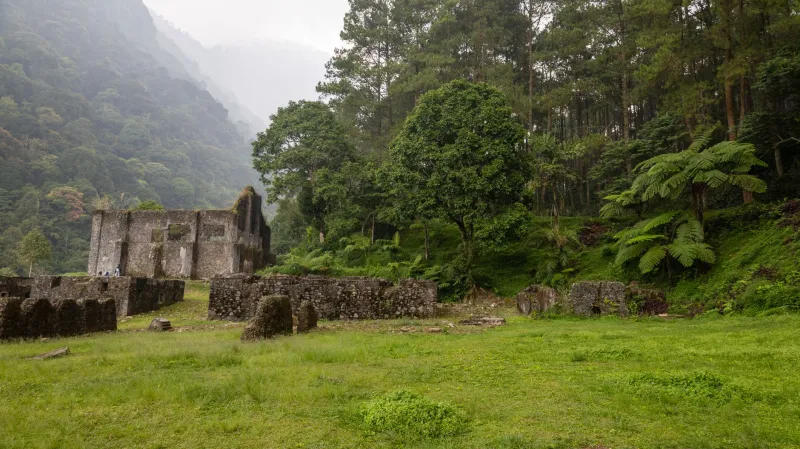
The same principle governs his treatment of physical geography. The ruins that Frodo and his companions pass through are not merely atmospheric decoration. They are calendrical markers—evidence of kingdoms that rose, flourished, and collapsed across spans of time that dwarf the events of the narrative itself. Amon Sûl, the Barrow-downs, the Dead Marshes: each is a layer in a geological record of civilization. Time, in Middle-earth, is legible in the landscape.
Immortality as Burden, Mortality as Gift
Perhaps nowhere is Tolkien's temporal vision more philosophically sophisticated than in his treatment of Elvish immortality. Popular fantasy, both before and after Tolkien, has tended to portray immortal beings as enviable—creatures freed from the indignity of decay and loss. Tolkien inverted this almost entirely.
For the Elves of Middle-earth, immortality is not a liberation but a form of accumulation. They cannot forget. They cannot escape. Every friendship lost to mortal death, every kingdom fallen to war, every beautiful thing unmade by time adds another layer to a grief that has no terminus. Galadriel, standing in her forest realm, is not a figure of serene power. She is a figure of immense, patient sorrow—someone who has watched the world diminish for so long that the very act of caring has become a kind of courage.
This reframing of immortality was genuinely new, and its reverberations through subsequent fantasy literature are unmistakable. Authors from Ursula K. Le Guin to Robin Hobb have returned again and again to the question of what long life actually costs, building on the emotional and philosophical territory Tolkien opened. The immortal as tragic figure—rather than enviable one—is now so common in the genre as to feel instinctive, but it was Tolkien who first made the case with this degree of rigor.
The Ring and the Slow Corruption of Time
If Elvish immortality represents time's weight on the grand scale, the One Ring demonstrates it on the intimate, psychological level. The Ring does not corrupt its bearers quickly. It is patient in a way that feels almost geological. Bilbo, after sixty years, shows the strain as a kind of thinning—he describes himself as butter scraped over too much bread. Gollum, after five centuries, has been so thoroughly hollowed that the creature he once was exists only in faint, almost archeological traces.
This slow corruption is one of Tolkien's most quietly devastating ideas. Evil, in his cosmology, does not announce itself with sudden violence alone. It operates through duration, through the gradual replacement of self with appetite. The Ring is dangerous not because it is powerful in the conventional sense, but because it has time on its side. It can afford to wait.
Modern fantasy has absorbed this lesson in varied and fascinating ways. Brandon Sanderson's magic systems often encode a cost that compounds over time, drawing on the Tolkienian intuition that power and duration are always in tension. N.K. Jemisin's Broken Earth trilogy uses geological time—literally, the timescale of tectonic catastrophe—as both setting and metaphor, asking what survival means across centuries of cyclical destruction. These are not imitations of Tolkien; they are conversations with him, conducted across decades of genre evolution.
Subversion as Homage
Not every contemporary author has chosen to extend Tolkien's temporal framework. Some have deliberately fractured it. Joe Abercrombie's First Law series, for instance, operates in a world where the sense of mythic depth is deliberately undermined—where the great heroes of legend turn out to have been ordinary, compromised people whose stories were cleaned up by subsequent generations. The past in Abercrombie's world is not a lost golden age; it is a lie told by the powerful. This is, in its own way, a response to Tolkien's treatment of time, an argument that the elegiac mode can become a form of political evasion.
Similarly, China Miéville's work frequently confronts the nostalgia implicit in Tolkienian temporality, insisting that the longing for a vanished age is itself a symptom of something worth interrogating. These subversions are only legible against the backdrop of what Tolkien established. The argument requires the original premise to argue against.
Why It Still Matters
For the community that gathers around Middle-earth—readers, scholars, fan writers, and world-builders who have spent years inside Tolkien's creation—the temporal dimension of his work is not merely an academic curiosity. It is the source of much of what makes Middle-earth feel irreplaceable. The world does not begin with the story and end with it. It breathes with a history that exceeds any single narrative's capacity to contain.
When fan writers extend Middle-earth into its uncharted periods—the First Age battles, the lost civilizations of Númenor, the earliest days of the Elves under starlight—they are not simply filling gaps. They are participating in a tradition of temporal thinking that Tolkien established and that the best of modern fantasy continues to honor. Time, in this tradition, is not background. It is the substance of meaning itself.
Tolkien understood something that the genre is still learning to articulate: that a world without a past is a world without weight, and a world without weight cannot bear the stories that matter most.