Whose Middle-earth Is It, Anyway? How Recent Adaptations Are Forcing Fandom to Confront Its Own Boundaries
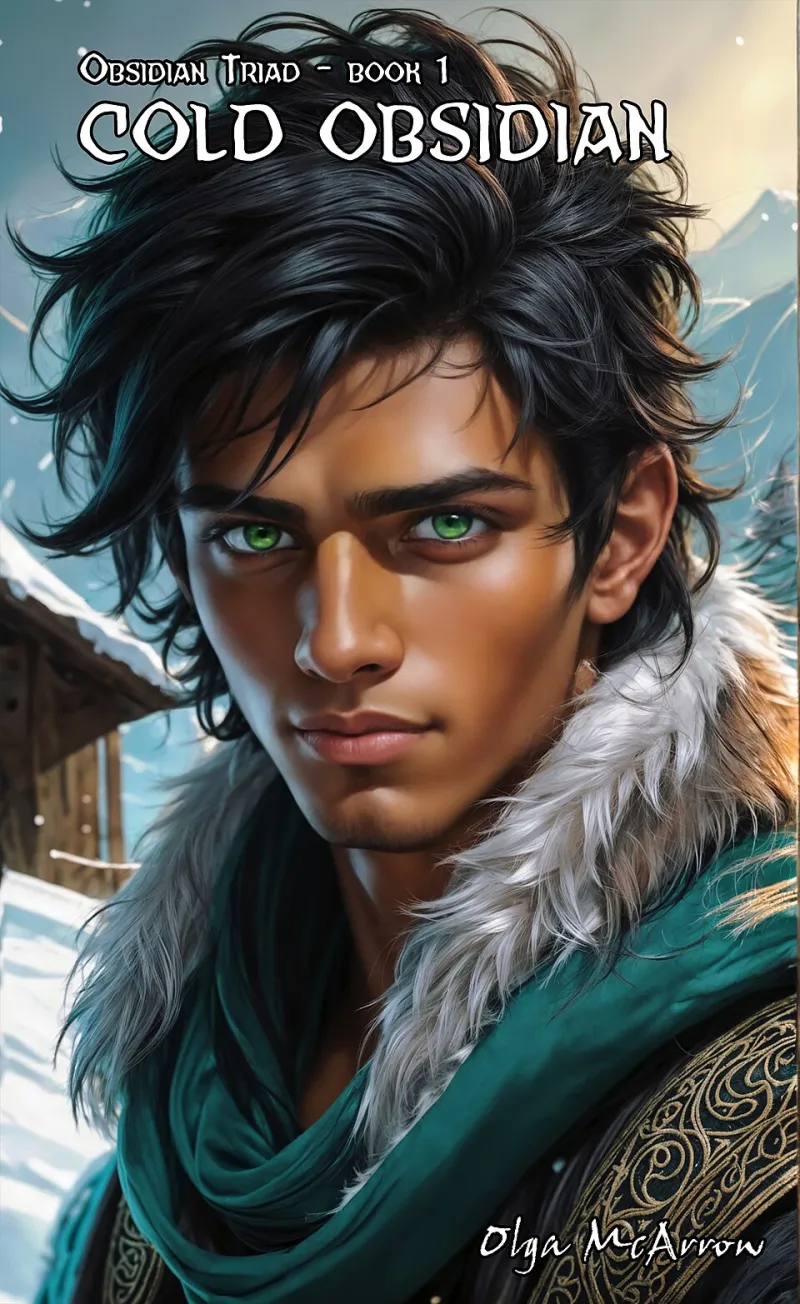
Photo: Mildegard aka Olga McArrow, CC BY-SA 4.0, via Wikimedia Commons
A Fandom at the Crossroads
For decades, Middle-earth existed in a particular kind of equilibrium. Tolkien's texts were the fixed stars, and everything else — the fan art, the role-playing campaigns, the meticulously sourced lore debates — orbited around them at a respectful distance. Even Peter Jackson's landmark film trilogy, for all the controversy it stirred, operated with a recognizable fidelity to the emotional and moral architecture of the source material. Fans could argue the edges, but the center held.
That equilibrium has grown considerably more precarious in recent years. As new adaptations have arrived with broader mandates, larger budgets, and more explicit ambitions to reach audiences who have never cracked a single volume of The Lord of the Rings, the Tolkien fan community has been thrust into a reckoning it was perhaps not fully prepared to have. The arguments are loud, sometimes bitter, and frequently illuminating — not merely about the adaptations themselves, but about the nature of fandom, the ethics of interpretation, and the uncomfortable question of who, if anyone, gets to be the final authority on Middle-earth.
The Illusion of a Stable Canon
One of the first things serious engagement with these debates reveals is that the notion of a stable, unambiguous Tolkien canon is itself something of a comforting fiction. Tolkien spent decades revising his legendarium, leaving behind a body of work riddled with contradictions, abandoned drafts, and deliberate ambiguities. Christopher Tolkien devoted much of his life to assembling posthumous volumes — Unfinished Tales, The History of Middle-earth series — that laid bare just how provisional and fluid his father's vision remained until the end.
Fans who invoke "canon" as a shield against adaptation choices are, in many cases, defending a particular editorial snapshot of a text that was never truly finished. This is not a criticism; it is simply an honest accounting of the material. And it matters enormously, because it means that every adaptation — including the ones fans have already canonized in their own minds — involves interpretive choices. The question is never whether to interpret, but how, and in service of what.
What the Anger Is Really About
The intensity of fan reaction to recent Tolkien adaptations in the streaming era has struck many outside observers as disproportionate. But those who study fan communities recognize something more complex operating beneath the surface of the outrage.
For a significant portion of Tolkien's American readership, Middle-earth is not merely a fictional setting. It is a landscape of genuine emotional and even spiritual significance — a place encountered during formative years, returned to during grief or difficulty, and shared across generations within families and friendships. When a major studio reconfigures that landscape according to its own priorities, the reaction is not simply aesthetic disagreement. It can feel like a violation of something personal.
This dynamic is not unique to Tolkien fandom, of course. Similar tensions have surfaced around Star Wars, the Marvel universe, and other long-running mythologies that have accumulated passionate custodians over decades. But the Tolkien case carries particular weight because of the unusual depth and internal coherence of the source material. Fans have spent years — sometimes lifetimes — learning the languages, tracing the genealogies, and debating the theological underpinnings of Arda. The sense of earned expertise is real, and the frustration when that expertise appears to count for little in a boardroom is equally real.
The Harder Question Adaptation Forces Us to Ask
Yet the debates, for all their heat, have also produced something genuinely valuable: a forced confrontation with questions that fan communities often prefer to leave unexamined.
If a Tolkien adaptation introduces a character or storyline not found in the original texts, is that inherently a betrayal — or is it an act of world-building not entirely unlike what fan fiction writers do every day on Archive of Our Own? If the answer is that studios are different because they operate for profit and at scale, that is a fair point, but it is a point about power and economics rather than about creative legitimacy per se. Fan communities have long celebrated expansive, sometimes radical reinterpretations of Tolkien's world when those reinterpretations emerge from within the community itself. The discomfort with adaptation may, in part, reflect an anxiety about who controls the terms of that expansion.
There is also the matter of audience. Tolkien wrote with a specific cultural and literary tradition in mind, and his work bears the marks of that tradition in ways that are sometimes beautiful and sometimes limiting. Adaptations that choose to address those limitations — by expanding the roles of women, by diversifying the visual representation of Middle-earth's peoples — are making interpretive choices, certainly. But so is the decision to leave those aspects unchanged. Neutrality is not available here. Every retelling is an argument, whether it announces itself as one or not.
Living with Creative Plurality
The Galadhrim community has always understood, at some level, that Middle-earth is larger than any single telling of it. The fan fiction writers who have built careers on Tolkien's foundations, the cartographers who have mapped regions he only gestured at, the language enthusiasts who have extended Quenya and Sindarin into new registers — all of these acts of creation depend on the premise that the legendarium is an open system, a world that invites continuation.
Adaptations, even imperfect or contentious ones, operate within that same tradition. They do not replace the books. They do not erase the lore. What they do — and what makes them so disruptive — is introduce new visions of Middle-earth with a cultural reach and visibility that no fan creation can match. That asymmetry is legitimately frustrating. But it does not necessarily make adaptation itself the enemy.
The more productive path, perhaps, is the one that several corners of Tolkien fandom have already begun to take: treating each adaptation as a text in its own right, subject to the same rigorous, loving, argumentative analysis that the community has always applied to Tolkien's own work. Disagree fiercely. Critique specifically. Celebrate what succeeds and name what fails. But resist the temptation to treat any single version — including the one you grew up with — as the final, unimpeachable word on a world that was always, by its creator's own admission, unfinished.
Middle-earth has survived centuries of imagined history within its own mythology. It will survive the streaming era. The question worth asking is not whether it can endure adaptation, but what kind of community its fans choose to be in the process of debating it.