Tongues of the Eldar: A Fan's First Steps Into Tolkien's Living Languages
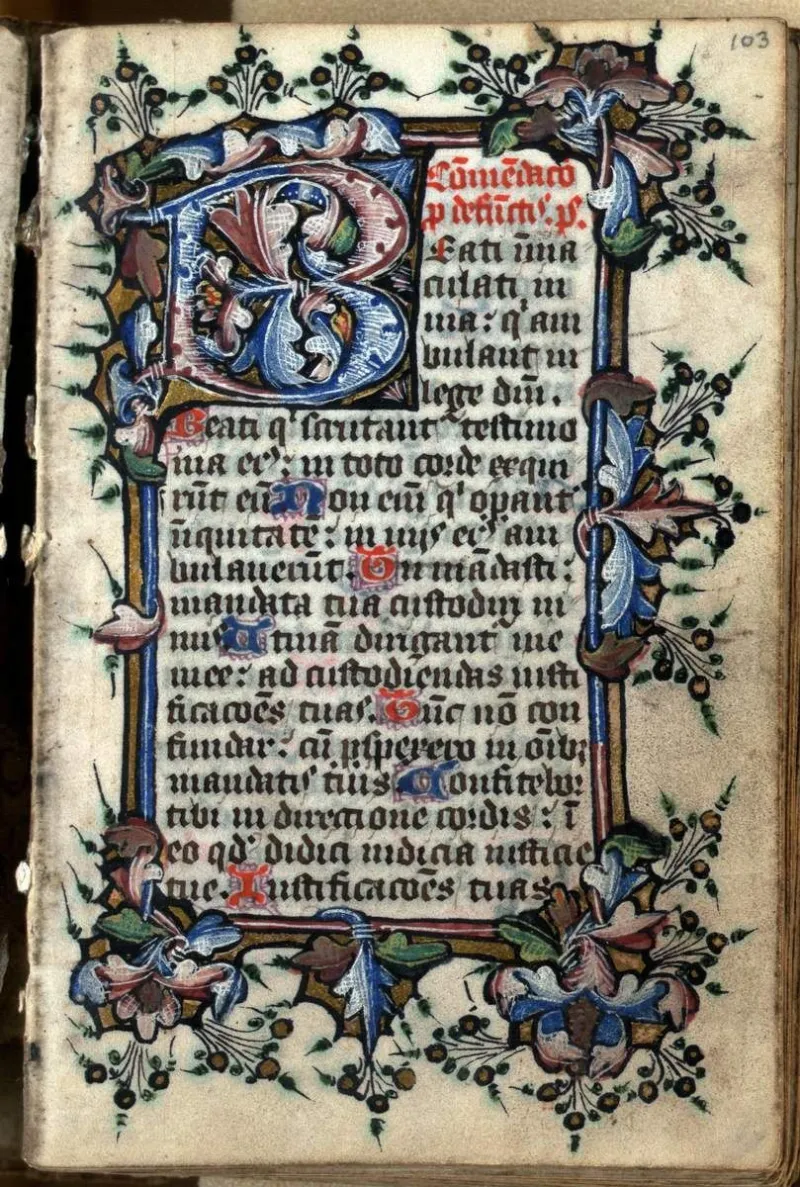
Photo: Elvish calligraphy manuscript ancient script illuminated letters, via i.pinimg.com
Long before Peter Jackson's films brought the rolling hills of the Shire to American living rooms, J.R.R. Tolkien had already built something far more intricate than a landscape: he had built a voice. Not one voice, in fact, but an entire family of them — constructed languages so internally consistent and aesthetically refined that professional linguists have studied them with genuine academic interest. For the devoted fan community, learning even a fragment of Sindarin or Quenya is not merely a hobby. It is an act of reverence.
This guide is intended for those standing at the threshold, uncertain where to begin. It is also a celebration of the thousands of enthusiasts across the United States and beyond who are ensuring that the Elvish tongues do not fade into silence.
What Tolkien Actually Built
It is worth pausing to appreciate the scope of what Tolkien accomplished before reaching for a vocabulary list. A professional philologist who taught at Oxford for decades, Tolkien did not invent Elvish as a narrative convenience. The languages came first. Middle-earth, by his own account, was constructed largely to give those languages a world to inhabit.
Quenya, sometimes called High Elvish, draws heavily from Finnish phonology. It possesses a formal, ceremonial quality — the Latin of Middle-earth, used in lore, poetry, and solemn invocation rather than everyday conversation. Sindarin, by contrast, bears a strong resemblance to Welsh in its sound patterns and mutation rules, and it functions as the living vernacular of the Grey Elves. It is the language Aragorn speaks, the tongue heard in Rivendell's halls, and the one most commonly adopted by fans seeking a language that feels organic and conversational.
Beyond these two, Tolkien sketched Khuzdul for the Dwarves, Adûnaic for the Númenóreans, and the Black Speech for Mordor — each with its own internal grammar and cultural logic. The breadth of this project remains staggering.
Where to Begin: Foundational Resources
For American fans approaching these languages for the first time, the good news is that the learning ecosystem has matured considerably over the past two decades.
Ardalambion (ardalambion.com), maintained by linguist Helge Fauskanger, remains one of the most comprehensive scholarly resources on Tolkien's languages available online. Its grammar courses in both Quenya and Sindarin are free, rigorous, and frequently updated as new source material is analyzed.
Tolkien Gateway offers accessible reference pages for those who want a lighter introduction before committing to formal grammar study. The Council of Elrond forums have long served as a gathering place where fans debate translations, share compositions, and assist beginners with their first attempts at writing in Tengwar, the Elvish script.
For those who prefer structured instruction, platforms such as Udemy and YouTube host courses and tutorial series of varying depth. The channel Elvish with Fiona has attracted a particularly loyal following among younger American fans who appreciate its approachable, conversational format.
Printed resources remain valuable as well. A Gateway to Sindarin by David Salo — the linguist who served as the language consultant for Jackson's film trilogy — provides a thorough academic treatment, while The Languages of Tolkien's Middle-earth by Ruth Noel offers a gentler entry point.
The Grammar Beneath the Beauty
One of the most common misconceptions new learners hold is that Elvish consists primarily of memorizing pretty words. In reality, both Quenya and Sindarin operate through grammatical systems of genuine complexity.
Sindarin, for instance, employs a phenomenon called consonant mutation, in which the initial consonant of a word changes depending on its grammatical context. The word peth (word) becomes beth in certain constructions. This mirrors the behavior of Welsh and initially baffles English speakers accustomed to a relatively fixed phonology. Patience with this feature is essential.
Quenya, meanwhile, makes extensive use of case endings — suffixes that indicate a noun's grammatical role in a sentence. There are at least ten cases documented in Tolkien's notes, though scholars continue to debate the precise function of several of them. This is part of what makes the study of these languages so intellectually engaging: Tolkien left enough material to work with, but not so much that all questions are settled.
How the Fan Community Keeps These Languages Alive
Perhaps the most remarkable aspect of Tolkien's linguistic legacy is not that scholars study it, but that ordinary fans use it — daily, creatively, and with unmistakable joy.
On platforms such as Reddit (particularly r/Tolkien and r/sindarin), fans post original compositions, request translation assistance, and debate fine points of grammar with a seriousness that would impress any university seminar. Discord servers dedicated to Elvish study have become particularly active spaces, offering real-time conversation in Sindarin for those brave enough to attempt it.
At conventions such as Mythmoot — hosted annually by the Signum University community — and various regional Tolkien Society gatherings across the US, attendees greet one another in Sindarin, conduct panels that incorporate Elvish text, and participate in calligraphy workshops focused on Tengwar script. These are not fringe activities. They represent a living tradition of linguistic stewardship.
Social media has accelerated this culture considerably. Accounts on Instagram and TikTok regularly share Tengwar calligraphy, Elvish poetry, and short spoken-word recordings. The hashtag #Sindarin surfaces hundreds of original creative works, many of them crafted by American fans in their twenties and thirties who discovered Tolkien through the films and followed the thread back to the source texts.
A Word on Scholarly Humility
Any honest guide to Tolkien's languages must acknowledge their incompleteness. Tolkien revised his linguistic work constantly throughout his life, and many of his notes remain unpublished or only partially released through volumes such as Vinyar Tengwar and Parma Eldalamberon — journals dedicated to the scholarly analysis of his linguistic papers. What this means practically is that no single, definitive grammar of Sindarin exists. Scholars sometimes disagree on key points, and learners should expect to encounter conflicting information.
This is not a reason for discouragement. It is, in fact, one of the qualities that keeps the fan community intellectually alive. The languages are not museum pieces. They are ongoing conversations.
Taking Your First Steps
If you are reading this as someone entirely new to the subject, consider beginning with a single, modest goal: learn to write your name in Tengwar. The script is beautiful, its learning curve is manageable, and the experience of seeing your own name rendered in Elvish characters has a way of deepening your connection to the legendarium in a manner that no amount of reading quite replicates.
From there, work through a basic Sindarin vocabulary — greetings, common phrases, the names of natural features. Follow one of the online communities. Ask questions without embarrassment. The Tolkien fan community, at its best, is extraordinarily generous toward those who approach its enthusiasms with sincerity.
The languages of the Eldar were created by one man's extraordinary imagination, but they are sustained now by the collective devotion of countless fans. In that sense, they have become something Tolkien may not have fully anticipated: a genuinely shared inheritance. Aiya, Elenion Ancalima. Hail, brightest of stars — and welcome to the study of a lifetime.